
Pancha Kosha - Introducing the five Sheaths of experience
Shalini Rao · July 1, 2026
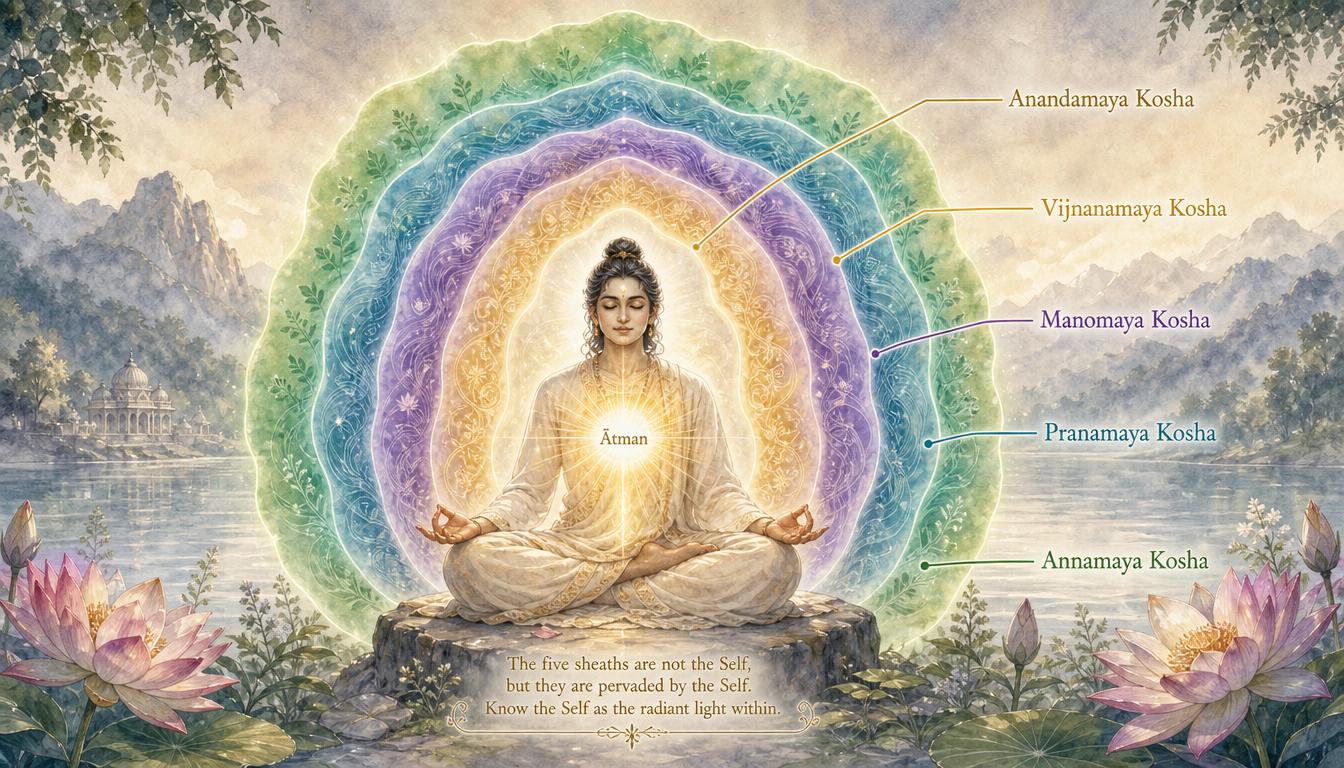
Let us look at the five levels of experiential existence as they are described in the Vedas. The five sheaths or layers are the Physical Body, the Energetic Body, the Mind, the Intellect, and our core essence called "Atman."
Let us look at the five levels of experiential existence as they are described in the Vedas. The five sheaths or layers are the Physical Body, the Energetic Body, the Mind, the Intellect, and our core essence called "Atman."
We have a body that is made up of atoms, which make up molecules, that make up cells, that make up our tissues, that make our organs, that make the organ-systems, and in turn an organism. And we have a physical experience from the cellular-level up. Every cell in our body has an experience. We are storing away the physical memories onto our cellular body - a collection of physical memories - memories of our past. And we have always a choice between this huge storage room of memories versus this moment to focus upon. Typically, our first story about our life is about this physical body's experience, the joy and sadness and grief and everything in between. This physical sheath, the first way we experience life, is called the Annamaya Kosha. This is riddled with complexities. It sounds very straight-forward but there are so many inter-connections in this body.
Our memories are stored in the Annamaya Kosha, its cells, tissues, and organs, in the entirety of our being — riddled with disappointments and misunderstandings, positive and negative experiences — are based on the physical experience of our Self.
The physical body possesses an overwhelming connection to the energetic body, or the PranamayaKosha. The energetic experience is the way we experience this life, including circulation in the physical body. How well your body circulates - blood, lymph, interstitial fluids, oxygen, breath, toxins, prana - determines how your body functions and how your brain - mind, intellect, and their functions - has inherent interconnections.
When our physical experience becomes overwhelmed, it can cause injury or trauma. To avoid such pitfalls, we can access the Pranam7amaya Kosha through practices including diaphragmatic breathing, belly breathing, and Pranayama. We can feed the physical body and support it with a higher vibrational quality to help its healing and improve our relationship with it.
The third sheath of experience is in our mind and is called the Manomaya Kosha. One cannot pinpoint where its energy points are. The Manomaya Kosha is subtler than the other sheaths. This is because the mind functions in coordination with other levels of existence. What kind of leaders are we? Where are we leading ourselves to? These are the kinds of questions the Manomaya Kosha can help to address. Additionally, this sheath aids us in differentiating between a healthy ego and an unhealthy one. An unhealthy ego remains self-interested and will annihilate anything other than itself. A healthy ego, on the other hand, is good-natured, understanding, and rooted in interconnectedness. It seeks to serve the wellness of others, because it understands at some level that such a serving is also in its own best interest.
If you thrive, I thrive; If you suffer, I suffer
The fourth sheath is the Intellect or the Vignanamaya Kosha. It is the part of the mind that discerns based on past experience. Discernment is a very spiritual process. Our preference for sweet and aversion for bitter. Gratitude for what we have been blessed with. How we perceive the opinions of others.
The fifth sheath focuses on the experience of peace and bliss, and it is called the Anandamaya Kosha. In this state we remain undisturbed, focused, and motivated; Our reality is impermanence; Whatever satisfies us in one moment doesn't satisfy us in the next moment. Things change all the time. In this sheath, one is able to move beyond the idea of satisfaction and move into non-violence.
When we are embodied, we are going to experience emotions. We are going to get attached. The question is how are we learning to be distanced from that attachment in a healthy way? This can happen by embracing more of the divinity that exists within us and diminishing our ego. In other words, more of the "Atman," or our true Self. Divinity can express itself within us as love, compassion, and peace versus acquisition, lashing out, and self-aggrandizement. Our aim, therefore, can be to feed the Koshas in a way that is balanced and harmonious.